The short version
- Mulch is the better choice for most planted beds. Michigan State University Extension says its advantages usually outweigh those of river rock or white rock.
- Stone fits side yards, walks, foundation strips and lightly planted spots where you would rather not add a layer each year.
- Mulch feeds the soil as it breaks down. Stone adds nothing to the soil, but it does not need a yearly top up.
- Neither one stops weeds for good. Leaves and dirt settle into stone, and seeds sprout there.
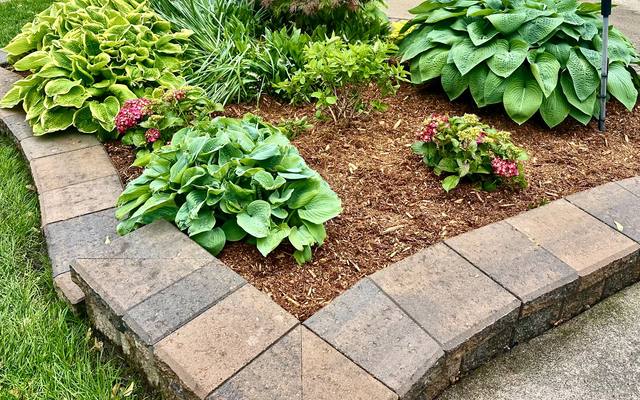
- You can use both: mulch around the plants, stone and boulders at the edges.
Most planted beds in Michigan should get mulch
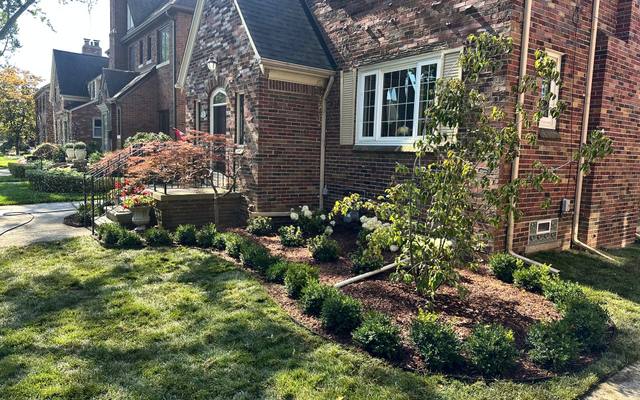
If the bed is full of trees, shrubs and perennials, use mulch. MSU Extension says the advantages of organic mulch, better soil and easier spreading, usually outweigh those of river rock or white rock. University of Minnesota Extension says organic mulches are generally favored in gardens and landscapes, because they improve the soil as they break down.
Stone has a real place too. It looks sharp and it stays put, and MSU allows that inorganic mulch can suit specific situations. Just use it where your plants are not counting on the soil getting better.
Mulch wins on soil, stone wins on lifespan
Most of this table comes down to one fact: mulch breaks down and stone barely does.
| What matters | Mulch | Stone |
|---|---|---|
| The soil | Adds organic matter as it breaks down | Adds nothing |
| Upkeep | Needs freshening as it breaks down | Weathers slowly and lasts a long time |
| Weeds | A good layer smothers many of them | Seeds and dirt settle in, and weeds follow |
| Summer heat | Lowers peak soil temperatures | Gets hot, which can stress sensitive plants |
| Cost to install | Usually less | Usually more |
| Changing your mind | Easy to rake out or move | Heavy and slow to take back out |
Soil, weed and heat notes from MSU, University of Illinois and University of Minnesota extension. Cost is a general rule, and every bed is different.
Where mulch is the better call
- Around trees, shrubs and perennials. Minnesota Extension says mulch lowers peak soil temperature in warm spells and slows heat loss in cool ones, which protects roots from sudden swings.
- On heavy clay. Clay is common across Metro Detroit. Mulch adds organic matter as it breaks down, and stone never will.
- Beds you may change. Mulch is easy to rake aside when you add a plant or move a bed line. Stone has to be shoveled out.
Depth is where most mulch goes wrong, so read how deep mulch should be before you add more. If you would rather hand it off, here is how our mulching work goes.
Where stone is the better call
- Narrow side yards. Grass has a hard time in a tight side yard, and a strip of river rock is a clean answer.
- Along walks and foundations. Stone suits a low care strip where planting is light. The ground under it still has to slope away from the house.
- Spots where plants will not grow. Illinois Extension names these as a good use for rock, and Minnesota says stone is best for walkways and areas where you do not want anything to grow.
- Spots where hard rain moves mulch. Stone is heavy enough to stay where light mulch can wash out.
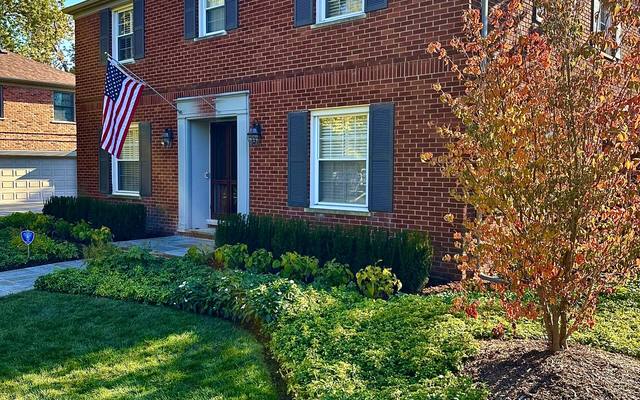
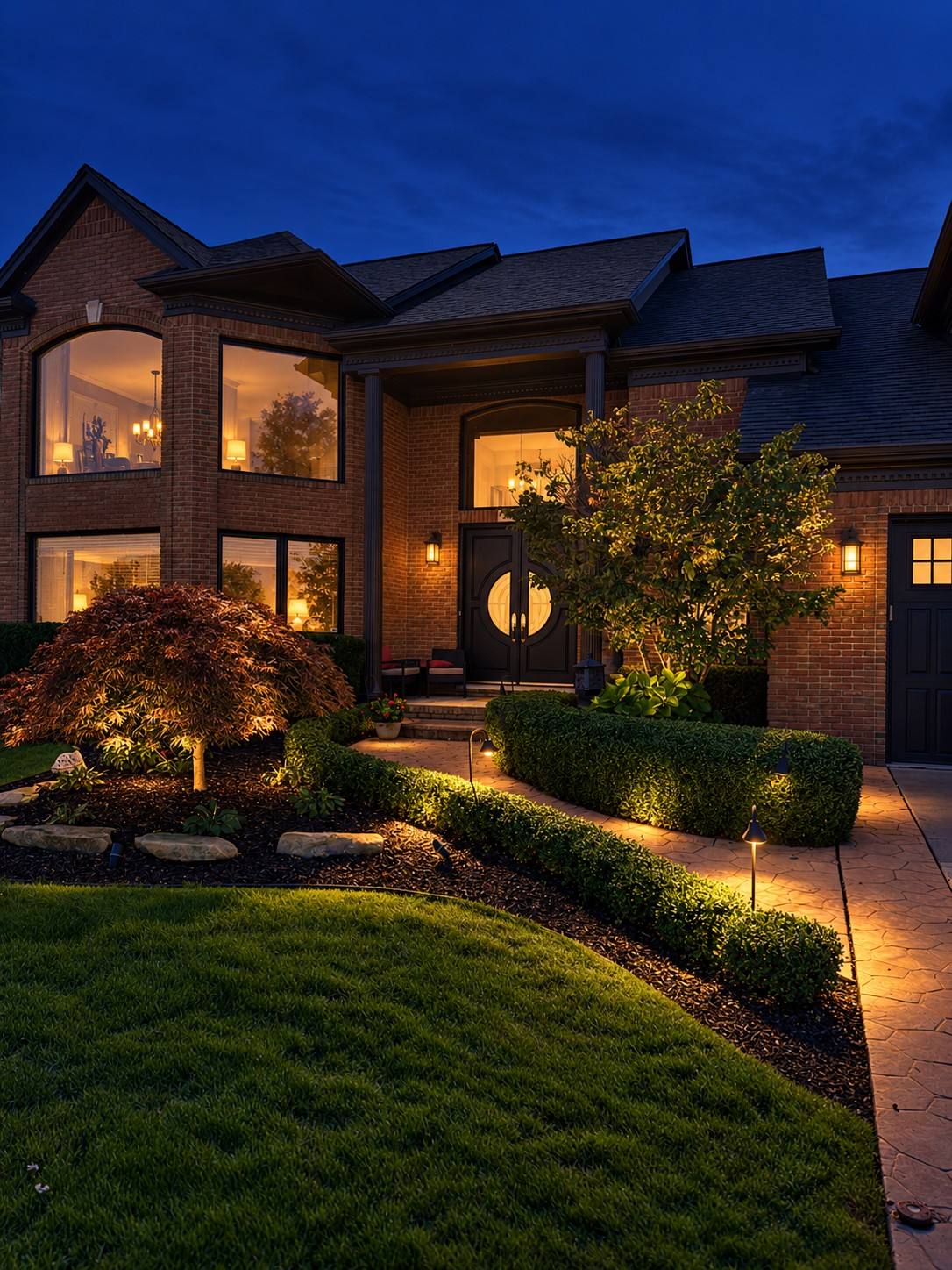
- A modern look. Black stone is clean against brick and clipped green, and it is the stone you will see most in our photos.
Around a tree, keep stone back from the trunk. Here is what we lay and how it goes in.
Three things stone will not do
Stone gets called the no maintenance choice. Low maintenance is closer to the truth.
- It will not stop weeds for good. Illinois Extension says deep stone can control weeds in the short term, but seeds and soil blow in, and those weeds can be hard to control. MSU says leaves build up in stone and weeds grow in them, which matters every Michigan fall.
- It will not keep plants cool. MSU warns that rock can get very hot in summer and stress sensitive plants. Sources split on the soil itself: Illinois cites research showing no summer rise, and Minnesota says it may go up. Mulch is the one known to lower it, so keep heat sensitive plants out of a full sun stone bed.
- It will not fix a wet yard. Stone covers a wet spot and leaves it wet. If water sits by the house, yard grading comes first, and our note on water by the foundation explains why.
Landscape fabric is not a permanent fix
University of Illinois Extension says fabric can restrict water and air moving through the soil, that it is not ideal for long term use, and that it holds weeds back for only a couple of years before new seeds blow in on top. Under mulch, it also keeps the mulch from working into the soil.
Under stone there is more of a case for it, mainly to keep the stone from sinking in a bed with no plants. Around plants it tends to get in the way. Ask Jake whether your bed needs it at all.
You do not have to pick one
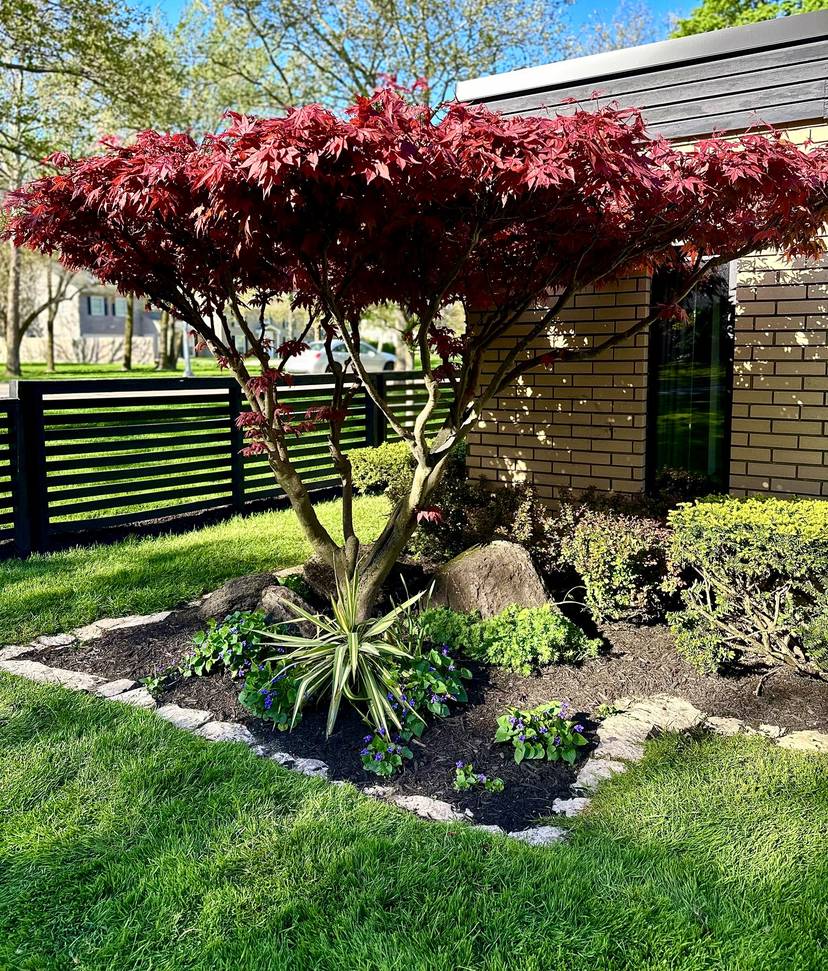
Plenty of beds use both. Mulch stays around the plants, where the soil needs it. Stone and boulders take the edges, the strip along the walk or the corner where nothing grows. A clean border such as steel edging keeps each one where it belongs.
Color is easier to judge on a real bed than on a pile in a stone yard. You can tap through mulch and stone finishes on one of our beds on the rock and stone page, and Jake can talk it through when he walks the property. Call or text (586) 718-8762 for a free itemized estimate.
Where this comes from
- Michigan State University Extension, articles on mulching, including Mulch: Just Do It, Mulching Tips for the Landscaper and Select the Right Garden Mulch
- University of Illinois Extension, How to Select a Garden or Landscape Mulch, and The Disadvantages of Landscape Fabric
- University of Minnesota Extension, Mulching for Soil and Garden Health