
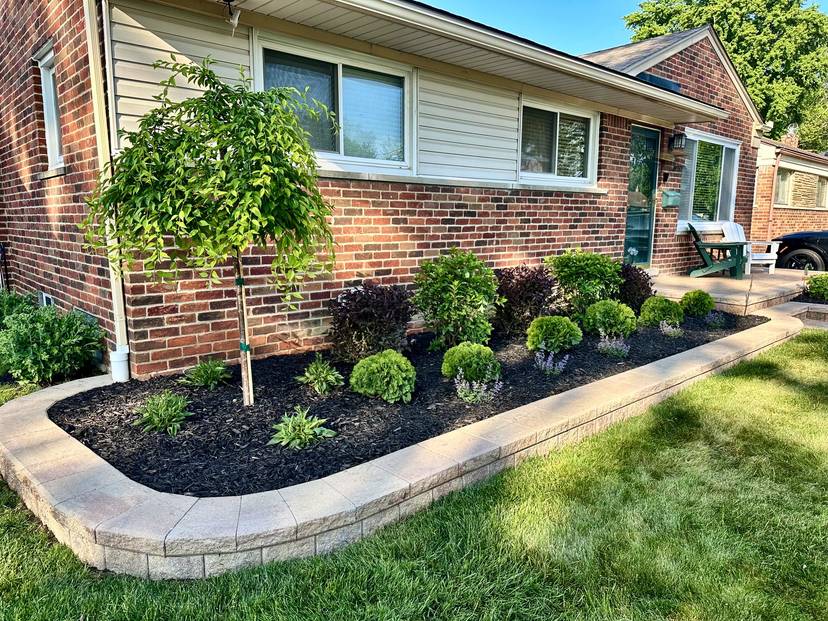
Retaining walls in St. Clair Shores, MI and across Metro Detroit: Block walls that hold the line.
A bed that stands up off the lawn, a grade that stays put, a clean line across the front of the house. HD Landscape builds low block walls and raised bed borders, and the part that keeps a wall straight is the part you never see.
- Low block walls
- Raised bed borders
- Beds finished to the wall
What a wall does
A good wall starts below the lawn.
A retaining wall holds soil at one level so the ground beside it can sit at another. We build the low kind: block walls a few rows high that lift a bed off a flat lawn or keep soil off a walk.
Short walls like these are usually dry stacked, meaning the block sits without mortar, so a wall is only as straight as the base under it. The trench, the gravel and the first row matter most, because every row above copies what that one does.
- A level trench with a packed gravel base under the block
- A first row set level, block by block
- Gravel behind the block, so water drains instead of pushing
- Clean caps, with the bed or lawn finished right up to the wall
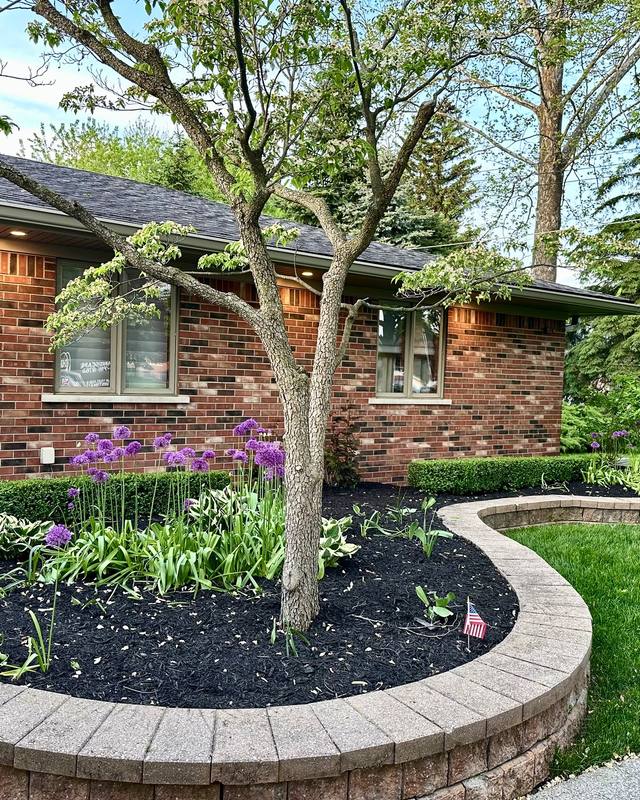
Real jobs
Low walls and borders from our own jobs.
Every photo here is one of our jobs. Look at the curves and the corners. That is where wall work shows who built it.
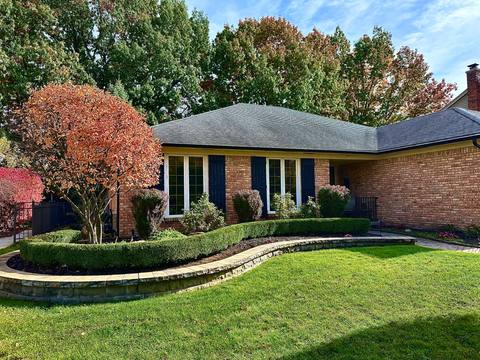
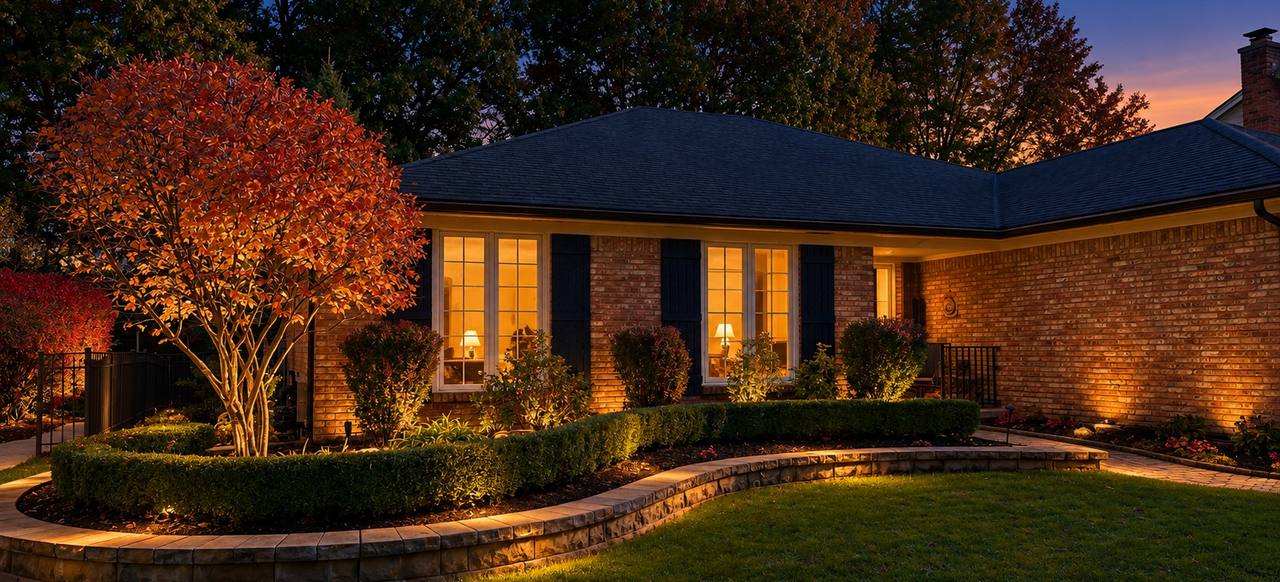
A clipped hedge on a curved stone bed, in fall 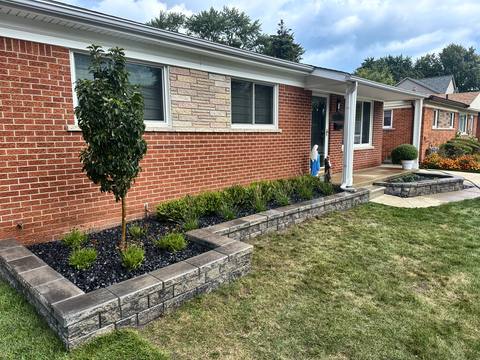
New raised bed with a stacked block border 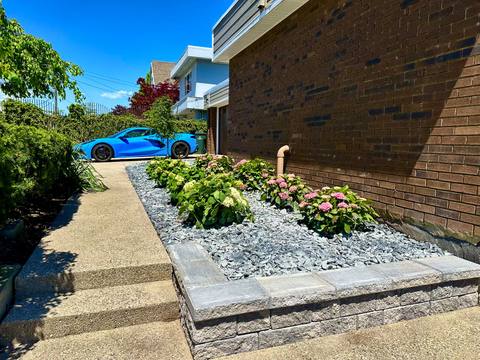
River rock and hydrangeas in a block planter 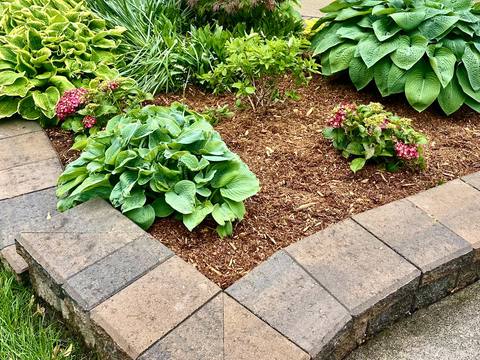
Hostas in a curved paver border 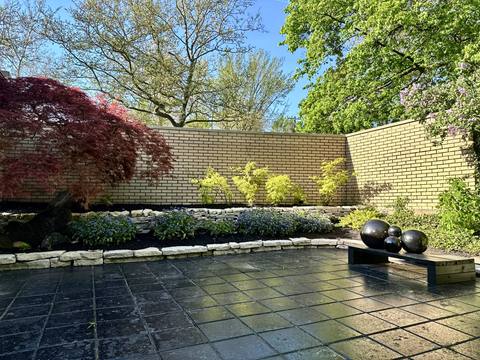
Courtyard planting with a low stone border 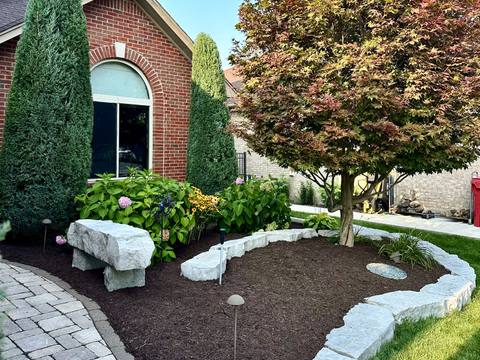
Limestone edge beside a paver walk
Know what you need
Three jobs people call a retaining wall.
The right wall depends on how much soil it holds and what sits above it. This is how we sort it out on the walk through.
Raised bed border
- What it does
- Lifts a bed above the lawn and gives it a clean, finished edge
- What pushes on it
- Bed soil and mulch, so not much load
- What it takes
- A level trench, a packed base and clean block work
- From us
- Yes, this is the work in our photos
Low retaining wall
- What it does
- Holds a real step in the ground between two levels of yard
- What pushes on it
- Soil and water behind it, so the base and drainage do the work
- What it takes
- All of that, plus gravel behind the block and packed backfill
- From us
- Yes, when the grade and the site allow it
Tall or loaded wall
- What it does
- Holds a steep bank, or carries a driveway or structure above it
- What pushes on it
- A lot of soil, water and weight, often more than block alone can take
- What it takes
- An engineer's design before the digging starts
- From us
- Ask first. If it needs an engineer, Jake will say so
Where it helps
Where a low wall earns its place.
Front beds on flat lots
On a flat lot, a bed can disappear into the lawn. A border a few rows high gives it a shape you can see from the street and keeps the soil and mulch where they belong. It is a natural piece of a landscape renovation.
Clay that stays wet
Soil maps of St. Clair Shores show mostly heavy, poorly drained ground with slopes of 0 to 2 percent. That ground holds water around roots, and a very wet spot is a good reason to build a raised bed. Lifting a bed gives plants soil you can control.
A slope that washes out
A yard that falls too fast sheds soil and is hard to mow. A low wall turns one steep pitch into two easier levels, and each level can be a lawn or a bed. It usually goes in with yard grading, since the ground on both sides has to be shaped.
Along a walk or drive
Where a bed sits higher than the concrete beside it, block holds the line and keeps mud and mulch off the walk.
Good to know
Why block walls lean, and how to avoid it.
When a wall tips or bulges, look under it and behind it first.
Water with no way out
Water trapped behind the block is what pushes most walls over. Drainage gravel gives that water a way down and out.
A soft or uneven base
Block set on loose soil settles unevenly. A wall needs a sound, compacted base, so the gravel should be packed down before the first block goes on.
Backfill dumped in at the end
Soil shoveled in after the wall is done keeps settling. The right way is to backfill and compact after each row goes on, not at the end.
A wall stacked too high
Past about 4 feet, many cities want an engineer's design, so confirm the number with yours. If a yard asks for more than a low block wall can give, you will hear it from us on the walk through.
The build
The important steps get buried.
Walk and mark
Start by walking the yard with Jake: which way the ground falls, where the rain ends up and where the wall should run. Buried lines get marked before digging. In Michigan that takes a MISS DIG 811 notice at least three business days ahead, on a job of any size, and when a contractor digs, the call is the contractor's.
Dig the trench
The trench follows the line and has to run level. Spare soil can go into the bed. Your estimate says how the rest leaves, so it does not become a pile by the garage.
Set the base
Gravel goes in and gets packed down. The first row goes on top and gets set level, block by block, before anything is stacked on it.
Stack and backfill
Rows go up with the joints staggered, each one set back a touch into the slope. Gravel and soil go in behind the block and get packed as the wall rises.
Cap and finish
Caps go on last. Then we fill the bed with plants, mulch or stone, clean up the lawn edge and leave the site tidy.
In their words
No pressure, and seamless from start to finish.
These customers hired us for landscape work of all kinds. How we show up does not change on a wall job.
I am extremely impressed with the work HD Landscape has done. Great team - they were very responsive and communicative. Very happy we decided to work with them!
Gina D.Landscaping
I recently had the pleasure of working with HD Landscape to completely revamp my outdoor space, and I couldn’t be happier with the results. From start to finish, the experience was seamless and exceeded my expectations in every way.
Billy W.Outdoor space revamp
Jake is a no pressure, skilled landscaper with excellent communication abilities. Contracting, communicating and paying for services are seamless, and Jake is reliable on time estimates. Highly recommend.
Mark R.Landscaping
Questions
What people ask about retaining wall.
The things people ask us most before booking. If yours is not here, call or text (586) 718-8762.
Do you build retaining walls in St. Clair Shores?
Yes. HD Landscape builds low block retaining walls and raised bed borders in St. Clair Shores, where the company is based, and across Metro Detroit, including Grosse Pointe, Birmingham and Rochester Hills. Seawalls are a different job, and we do not build or repair them.
How tall can a retaining wall be before I need an engineer?
The usual line is about 4 feet. Colorado State University Extension says many municipalities require walls over four feet to be designed by engineers, and that you should verify it with your city before you build. A shorter wall can need one too if it holds up a driveway, a steep bank or a structure. The walls in our photos are well under that line.
Does a retaining wall need a permit in Michigan?
It can. Each city sets its own zoning rules, so the answer turns on where you live, how tall the wall is and what it holds up, and your building department can tell you before work starts. In St. Clair Shores, the city also runs its own soil erosion permits, and the state says earth work within 500 feet of a lake or stream generally needs one.
What is the difference between a retaining wall and a raised bed border?
A retaining wall holds back soil that is pressing on it, usually where the ground changes level. A raised bed border lifts a planting bed above a flat lawn and holds mulch or stone in place, so it carries far less load. They can look alike, and both should start the same way, with a level trench and a packed base.
Do I need a retaining wall or just edging?
If the bed sits level with the lawn and you only want a clean line, steel edging may be all you need. If soil has to be held up, or you want the bed raised, block is the right call. When the smaller job is the answer, Jake says so.
Why is my retaining wall leaning?
The usual causes are water trapped behind the wall, a base that settled, or soil that was never packed in as the wall went up. Trapped water adds pressure, and block on a poor base moves. Text Jake a photo of the lean and he can tell you what he sees.
Can a retaining wall fix a wet yard?
Not on its own. A retaining wall holds soil, and the water still has to go somewhere. If the yard holds water or drains toward the house, start with yard grading, then decide if a wall still makes sense.
Do plants in a raised bed need more water?
Usually, yes. Raised beds dry out faster than beds in the ground, and the taller the bed, the more often it needs water. Jake will walk you through it, and we offer plant watering if you would rather hand it off.
How long does a retaining wall take to build?
Length, corners and how much soil has to move set the schedule, so Jake gives you the timing after seeing the yard. Once a date is set, the crew shows up when we said it would.
How much does a retaining wall cost?
There is no fair number to print, because a border along one bed and a wall holding a real step in the ground are very different jobs. Length, height, the block and the digging set the price. Jake works it out after seeing the yard, and the free estimate is itemized, so you can go through it line by line.
Where we do this
- St. Clair Shores
- Retaining walls in Grosse Pointe
- Grosse Pointe Park
- Grosse Pointe Farms
- Grosse Pointe Woods
- Grosse Pointe Shores
- Retaining walls in Birmingham
- Bloomfield Hills
- Bloomfield Township
- Beverly Hills
- Franklin
- West Bloomfield
- Royal Oak
- Huntington Woods
- Troy
- Rochester
- Retaining walls in Rochester Hills
- Oakland Township
- Lake Orion
- Clinton Township
- Harrison Township
- Macomb Township
- Shelby Township
- Sterling Heights
- Washington Township
- Warren
- Fraser
- Mount Clemens
- Chesterfield Township
- New Baltimore
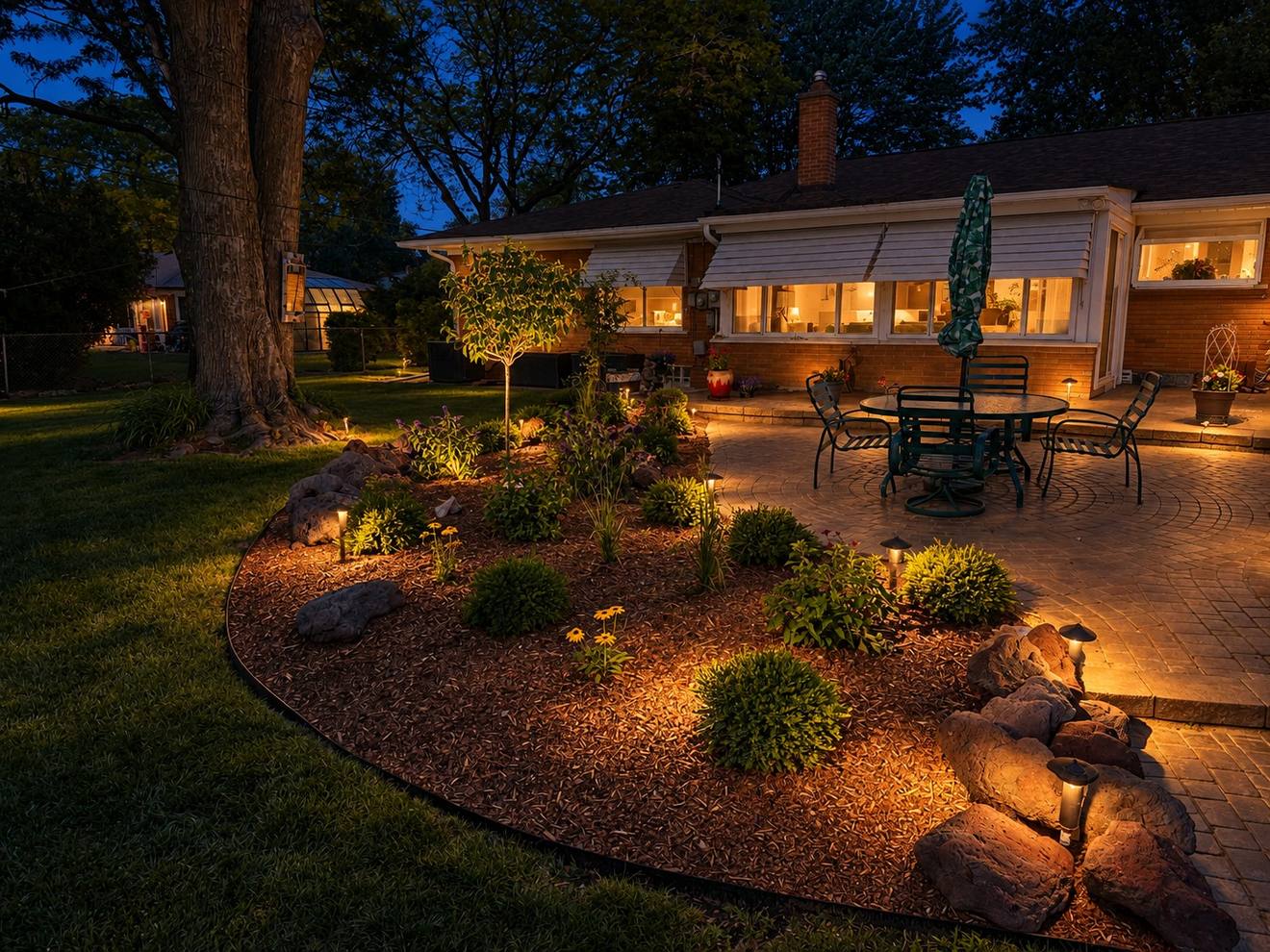
Background: a finished job, relit for evening
Free estimate
Tell us what the ground is doing.
Where does it drop, what does it need to hold, and how do you want it to look? A photo by text is a fine place to start. Jake's estimate comes itemized, and it is free.