
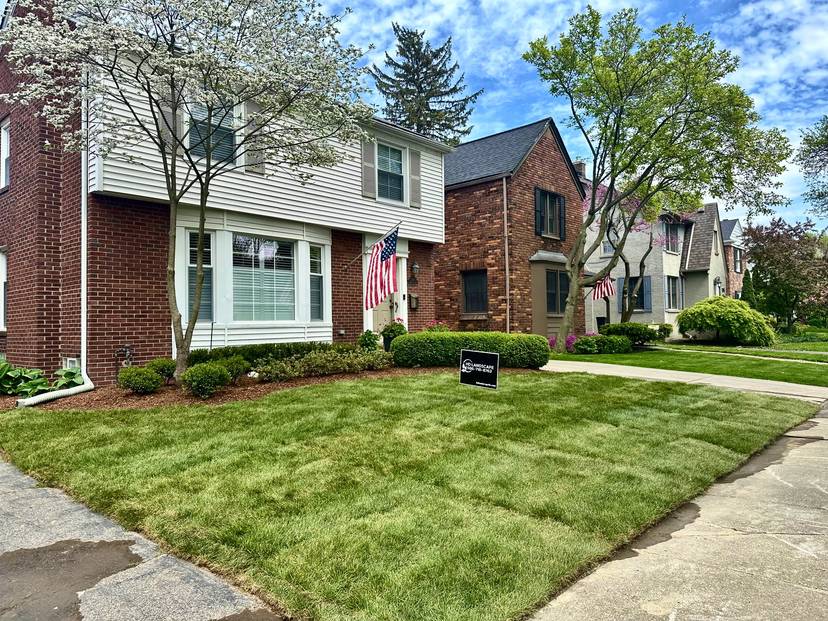
Yard grading in St. Clair Shores, MI and across Metro Detroit: Give the rain somewhere else to go.
A lawn that lies smooth, and rain that runs away from the foundation instead of toward it. HD Landscape cuts the high spots, fills the soggy corners and shapes the ground, then finishes it with sod, stone or new beds.
- Water sent away from the house
- Low spots filled
- Ready for sod or beds
What grading does
Grading is how a yard handles rain.
Yard grading means reshaping the top of the ground so water runs where you want it to go. We cut down the high spots, fill the low ones and build a steady fall away from the house, so rain leaves the yard instead of sitting in it.
It is the job nobody notices once the grass is in, and everything else sits on top of it. Sod on a bad grade stays soggy, beds settle and the low corner keeps its puddle. It matters even more in St. Clair Shores, where the ground is heavy and slow draining and map slopes mostly run 0 to 2 percent, so rain soaks in slowly and has little fall to follow.
- High spots cut and low spots filled
- Ground sloped away from the foundation
- Fill placed in tamped layers, so it does not sink later
- Finished soil below the siding, never piled against it
Real job
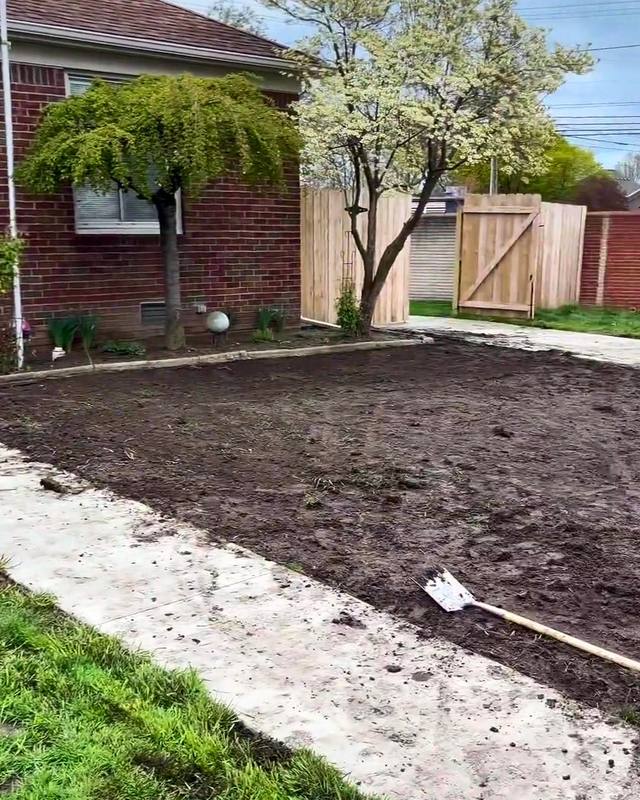
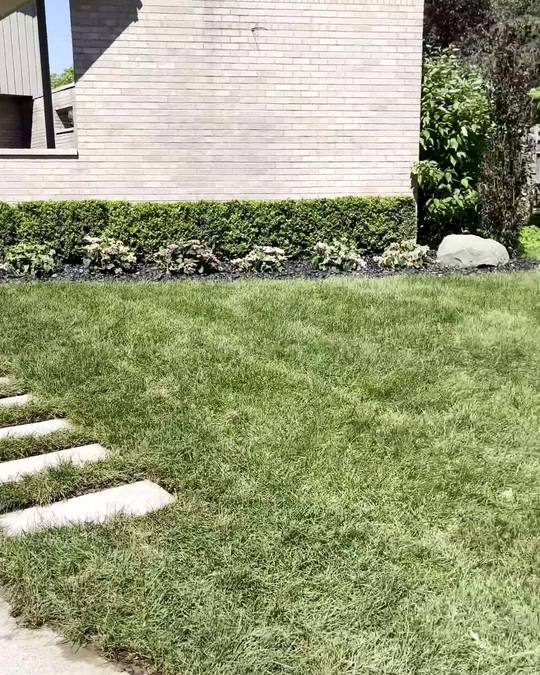
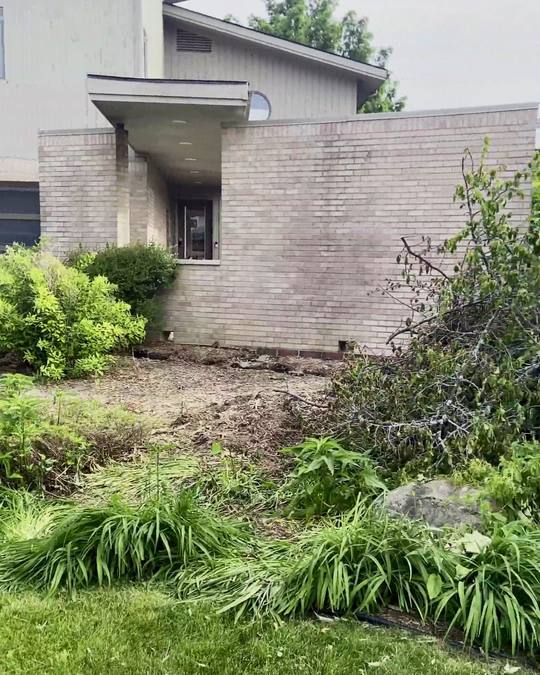
Rough and overgrown to smooth and green.
The same yard, from Jake's own video. Drag the line to compare.
- Overgrown plants cleared out
- Ground regraded and smoothed
- New sod laid, with steppers set into the lawn
Good to know
Six signs a yard needs grading.
Puddles that stay
Water still standing more than a day or two after the rain stops. On slow clay, that often means it has no slope to follow.
Soil tipping toward the house
Ground that is flat at the foundation or falls toward it. Soil beside a house often settles later on, especially under stoops, so even a good yard can lose its slope.
Downspouts that dump at the wall
Roof water should land at least 4 feet beyond the wall. Check this first, since it is an easy fix.
A lawn that stays soggy
Spots that squish days after a storm, ruts from the mower and grass that thins out where water sits.
Mud on the walk
Soil washing across a walk or driveway after a storm means water is running fast through one spot.
New sod or beds on the way
The time to fix a grade is before anything goes on top of it, which is why it comes first on a sod job or a renovation. Fixing it later means pulling the new work back up.
Why it matters
Point the ground away from the house.
When the ground at a foundation is level or tips toward the house, rain gets sent at the basement wall. The fix is a steady fall away from the house, steeper right beside it and gentler across the lawn.
6 inches of fall over 10 feet. Water runs away from the house.
The numbers
How much fall a yard needs.
These are university extension figures, and they work together: steeper beside the house, gentler across the lawn. The slider above uses 6 inches of fall over 10 feet, the common building code rule of thumb, and the figure beside the house asks for a little more. Your lot decides what fits, so Jake checks it on site.
Beside the house
- Target
- At least 1 inch of fall per foot, for at least 6 feet
- What it does
- Sends rain away from the foundation wall
- If it falls short
- Add fill, tamped in layers
Across the lawn
- Target
- 1 to 2 feet of fall per 100 feet
- What it does
- Carries surface water off the lawn
- If it falls short
- Cut the high spots and fill the low ones
At the downspout
- Target
- Water let out at least 4 feet beyond the wall
- What it does
- Keeps roof water away from the foundation
- If it falls short
- Add an extender or splash block
The job, start to finish
Start with the water. Finish with the grass.
Find the water
Walk the yard with Jake: where water comes from, where it sits and where it can go. A photo from the last big storm helps, because a wet day shows more than a dry one.
Plan the path
Water has to end up somewhere, and the neighbor's yard is not the answer. The plan needs a path to a low point that can take it.
Clear the ground
Old grass, weeds and tired plants come off, so fill lands on soil and not on a dead mat. How that debris leaves goes on your estimate. Buried lines get marked before digging, and in Michigan that takes a MISS DIG 811 notice at least three business days ahead.
Cut and fill
High spots come down and low spots come up. Fill belongs in layers, tamped as it goes, because loose soil settles and brings the puddle back.
Set the fall
The final grade gets raked smooth, and the fall away from the house gets checked. Soil stays below the siding.
Cover it
Bare ground does not stay put. We finish with sod, new beds, stone or a low wall so the new grade holds.
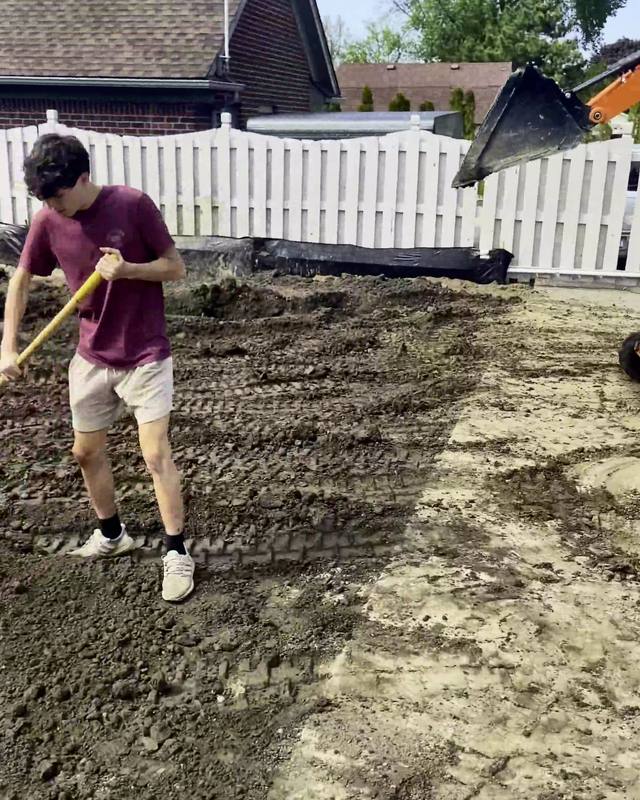
Halfway through a job
A machine moves the soil. A rake sets the finish.
That is a bucket at the edge of this photo and a rake in his hands, and it takes both. The machine shifts the soil. The rake takes out the ruts and sets the last inches of fall, and that is the surface the rain will follow.
Timing counts too. Wet clay packs down hard under a machine and is easy to ruin, so after a long rain the honest call can be to wait.
One thing to mention before digging: MISS DIG 811 does not mark private lines, like a sprinkler line or a power run to a shed. Tell Jake about any you know of.
Straight answers
What grading can and cannot fix.
Surface water
Puddles, soggy corners, soil that falls toward the house and rough ground before sod. Fix the grade and the downspouts before anything underground, because that may solve the problem.
Close lots
St. Clair Shores zones its general one family lots at a 6,000 square foot minimum, so a tight lot may not have room for a full slope. Pushing water next door only starts a new problem, so the plan has to work inside the lot lines.
Big trees
Old trees take grade changes badly. Soil piled over the roots or equipment driven across them can hurt a mature tree, so near big trees the level should stay where it is. A big tree that truly has to come out is a tree company's job, not ours.
Wet basements
A better grade takes surface water away from the wall. Water still coming through a crack or up through the floor after that calls for a waterproofing contractor, and Jake will say so if that is what he sees.
What customers wrote
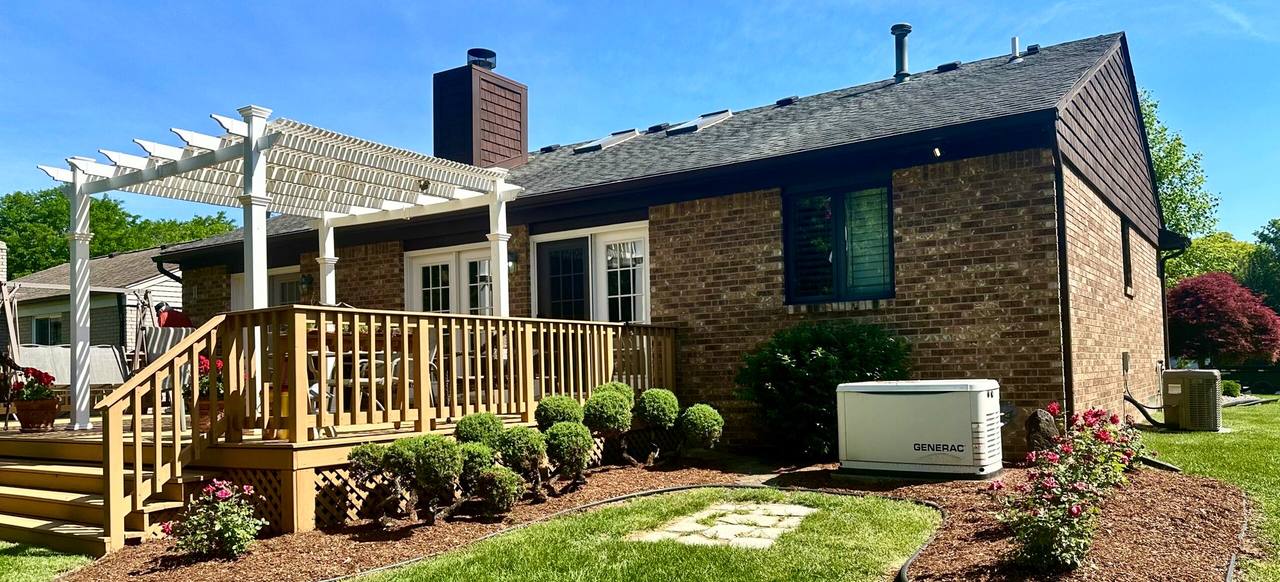
Leveled, finished and left clean.
Jake and his team were awesome! I had my yard completely gutted, leveled, new sod, pea gravel behind the garage and new plants. I was impressed with how clean they left the job and how efficient they were. What would’ve taken me a week was done in one day. …
Rob E.Full yard redo with sod
This young man and his crew were nothing less than amazing. They just completed a big project for us.... his team of young men were so polite, professional, easy to get along with... They did a great job on our yard and flower beds. The owner gave us some great advice before they started, and we listened to him.. and we are so glad we did. …
Stephen D.Yard and flower beds
Jake was quick to respond and very professional. We came up with a plan and he gave me an itemized bill which was very competitively priced. Jake and the crew arrived exactly when they said they would and the work was completed within a day. The whole crew did an amazing job, very hard working and even though it rained the entire day, they finished the job as promised. …
Renee G.Front and back yard
Questions
What people ask about yard grading.
The things people ask us most before booking. If yours is not here, call or text (586) 718-8762.
Do you do yard grading in St. Clair Shores?
Yes. HD Landscape does yard grading in St. Clair Shores, its home base, and across Metro Detroit. Soil maps here show mostly poorly drained ground on slopes of 0 to 2 percent, so a small mistake in a slope shows up as a puddle.
What is yard grading?
Yard grading is reshaping the surface of your yard so water runs away from the house instead of sitting in low spots. HD Landscape cuts high spots, fills low ones and smooths the ground, usually right before sod, beds or stone go in.
How much should a yard slope away from the house?
University of Minnesota Extension says at least 1 inch per foot for at least 6 feet from the foundation. Across the lawn, University of Illinois Extension says 1 to 2 feet of drop per 100 feet, which is a 1 to 2 percent slope. Your lot decides what is possible, and a walk of the yard with Jake settles it.
How do I know if my yard needs grading?
Watch it after a hard rain. Water that stands for more than a day or two, soil that slopes toward the house, soggy spots and mud washing onto the walk are all signs. Still not sure? Text a photo of the wet spot to (586) 718-8762 and ask Jake.
What is the difference between grading and leveling a yard?
Leveling smooths out bumps and dips. Grading sets the slope, so the surface falls in the right direction. A yard needs both, because it can be perfectly smooth and still drain toward the house.
Will regrading fix my wet basement?
It can help, and it is the right place to start. Handle surface water with downspouts and grade before paying for any drainage system below ground, because those fixes may solve the problem. If water still comes through a crack or up through the floor, a waterproofing contractor is the next call. A sewer backup is a different problem: the heavy rains of July and August 2016 overwhelmed the combined sewers in St. Clair Shores and caused hundreds of basement backups, and no grade stops that.
Can I just add topsoil to the low spots?
For a shallow dip, sometimes. The usual mistake is a thick layer dropped on old grass, which buries a dead mat and leaves a soft spot. Sod wants an even base with no dips under it, so the better way is to take off the old turf first and tamp the fill as it goes in. That keeps the spot from sinking again.
When is a good time to regrade a yard in Michigan?
Any time the ground is workable and not soaked, from spring through fall. Digging and driving on wet clay compacts it, so after a long rain it may have to dry first. If sod is going on top, early fall is a nice fit, because cooler weather means less watering.
Does regrading near Lake St. Clair take a permit?
It can. Michigan says a soil erosion permit is generally required for earth work that disturbs an acre or more, or that sits within 500 feet of a lake or stream. St. Clair Shores runs its own soil erosion program, so the question goes to the city, not the county, and it should go before the first shovel.
How long does yard grading take?
Many lawns are finished in a day, depending on the grade. Bigger yards and jobs with a lot of soil to move take longer. One customer had his yard gutted, leveled and finished with new sod, pea gravel and plants in a single day. Jake can give you the timing once he has seen the ground.
Do you install sprinklers when you grade a yard?
No. We do not install sprinkler systems. If you already have one, show us the lines and heads before we start, because grading moves soil right where they sit.
How much does yard grading cost?
We do not print prices, because a few loads of fill in one low corner and a front yard cut down for new sod are very different jobs. The size of the yard, how much soil has to move and what goes on top set the number. The estimate is free, and it comes itemized so you can go through it line by line.
Where we do this
- St. Clair Shores
- Grosse Pointe
- Grosse Pointe Park
- Grosse Pointe Farms
- Grosse Pointe Woods
- Grosse Pointe Shores
- Birmingham
- Bloomfield Hills
- Bloomfield Township
- Beverly Hills
- Franklin
- West Bloomfield
- Royal Oak
- Huntington Woods
- Troy
- Rochester
- Rochester Hills
- Oakland Township
- Lake Orion
- Clinton Township
- Harrison Township
- Macomb Township
- Shelby Township
- Sterling Heights
- Washington Township
- Warren
- Fraser
- Mount Clemens
- Chesterfield Township
- New Baltimore
Yard notes
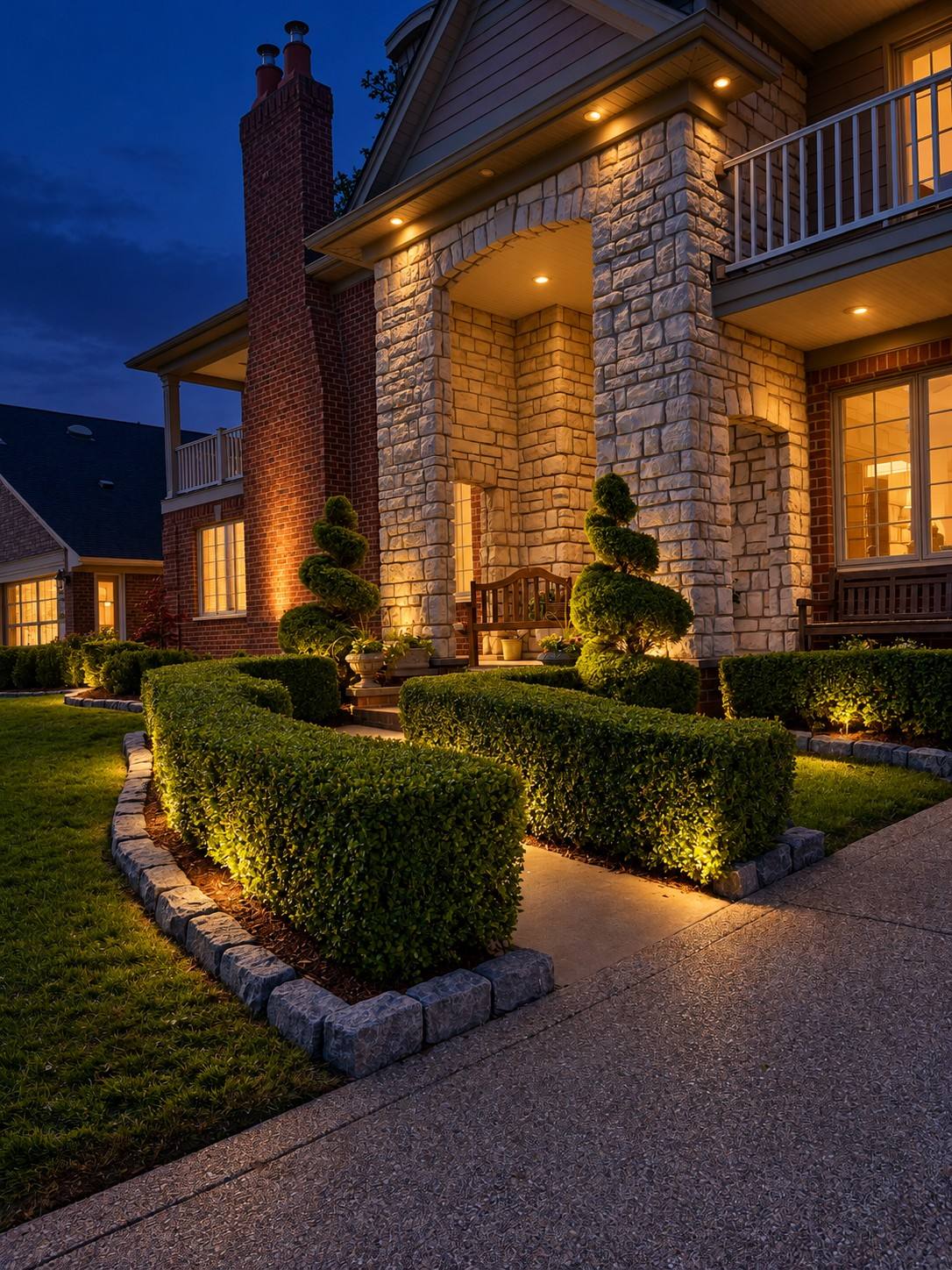
Background: a finished job, relit for evening
Free estimate
Show us the puddle.
Where does the water sit, and how long does it stay? A photo from the last big rain is a good start, and the itemized estimate costs nothing.