
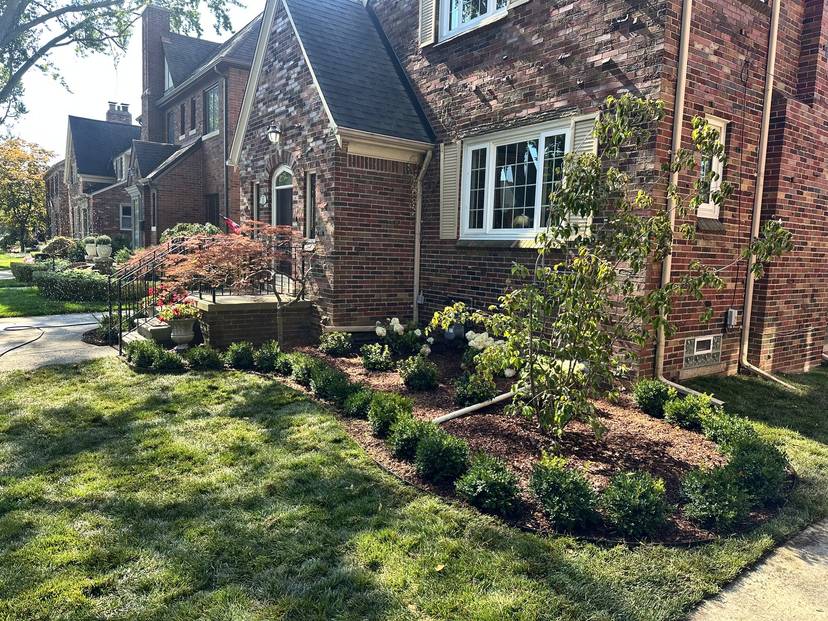
Plant installation in St. Clair Shores, MI and across Metro Detroit: The right depth, in the right place.
HD Landscape plants trees, shrubs and perennials picked for your light and soil, sets the root flare level with the ground, then mulches and waters them in. After that, Jake calls to see how it went and to walk you through watering each plant.
- Picked for your light and soil
- Root flare at ground level
- Follow-up call from Jake
Why planting fails
The part you cannot see is the part that counts.
Plant installation is the work of getting trees, shrubs and perennials out of the pot or burlap and into your yard so they last. The planting is what everyone sees. What decides how it turns out is underground, where nobody will look again once the mulch is down.
Michigan State University Extension is plain about it: a tree planted too deep or too shallow has a shorter life. The answer is to find the root flare, the spot where the trunk widens into the roots, and set it level with the ground. That adds a little time to every plant, and it is the one mistake you cannot fix later without digging the plant back up. Good planting looks like this:
- Root flare set level with the ground
- Holes dug at least twice as large as the root ball
- Filled back with the same soil that came out
- Twine removed, and burlap off or at least cut away from the top
- Two to three inches of mulch, kept back from the trunk
- A good soak right after planting
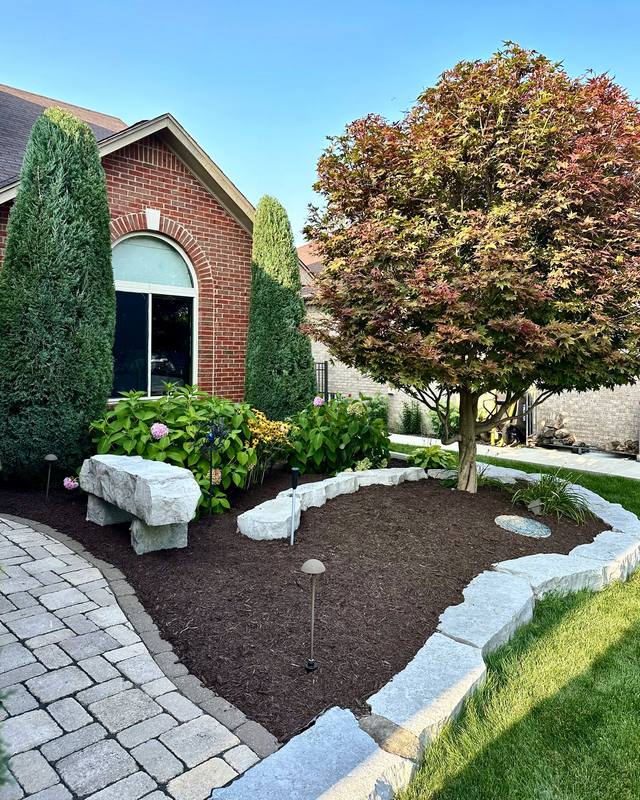
Why depth matters
Too deep is the quiet mistake.
MSU Extension lists wilting, stunted growth, dieback and early fall color among the signs of a tree planted too deep. You can often spot it from the sidewalk: the trunk goes into the ground like a fence post, with no flare at the base.
Too deep
- Root flare
- Buried below the soil line
- Roots
- Less water and oxygen reach the fine roots
- Over time
- Decline and a shorter life
What we do
The right depth
- Root flare
- Level with the ground, where you can see it
- Roots
- Free to grow down and out into the soil
- Over time
- The life the plant should have
Too shallow
- Root flare
- Sitting up above the soil line
- Roots
- Too high, with nowhere to spread
- Over time
- A shorter life than it should have
The order of the work
From first walk to first watering.
Walk the yard
Jake looks at where the sun lands, how the ground drains and what is already growing. Then he tells you what will do well there, and what will not.
Set the plan
What goes where ends up on an itemized estimate you can go through line by line.
Check the lines
Buried utility lines get marked before digging. Michigan requires notice to MISS DIG 811 at least three business days ahead, on any project of any size or depth.
Dig and set
Each hole goes in wide. Twine comes off, the root flare goes level with the ground and the same soil goes back around the roots.
Mulch and water
Mulch goes down two to three inches deep, pulled back from every trunk. Everything gets a good soak, and the pots, tags and loose soil get picked up.
Jake calls
After the crew leaves, Jake calls to ask how it went and to explain watering each plant. If you would rather not keep track, we can do the watering.
Try it
Try the plants before anything goes in the ground.
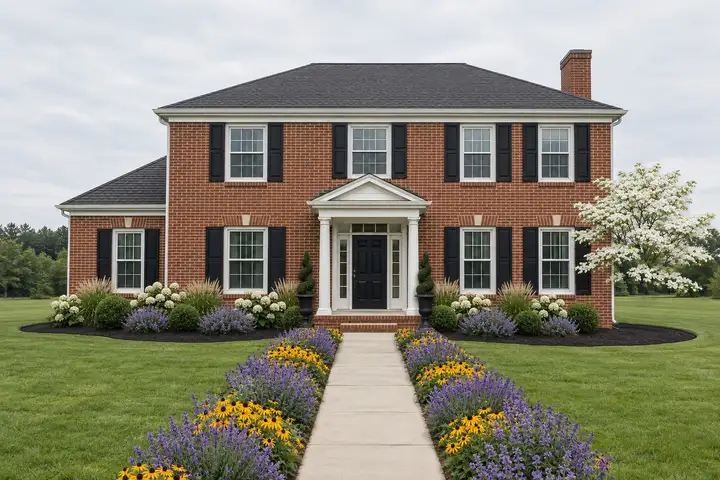
Swap the tree, the shrubs, the urns and the walk border on a full front yard, then send your favorite to Jake.
Open the Yard StudioRight plant, right place
We plant for the yard you actually have.
MSU Extension's advice is to look at sun, soil and drainage before you buy anything. In St. Clair Shores and the towns around it, that looks like this.
Sun and shade
Count the hours of full, uninterrupted sun the spot really gets. A plant that wants sun all day will sulk on the north side of a brick house.
Heavy soil
MSU Extension's Macomb County office describes the lower part of the county as almost all poorly drained soil, mostly clay. See how the spot drains before choosing plants. If water sits there, grading comes first.
Room to grow
Plants get bigger than the pot suggests. MSU Extension says to check the mature height on the plant tag against the spot. Mature width matters too, so nothing ends up fighting the gutters.
Wind off the lake
Strong wind dries out evergreen needles, and roots cannot replace that water once the ground freezes. On a yard open to Lake St. Clair, keep tender evergreens off the open side and give them a good watering before the freeze.
Salted roads
Lake St. Clair is fresh water, so the salt in St. Clair Shores comes off the road. Plants facing Jefferson, Harper or the freeway take the spray, and the side nearest the road is where it shows. Salt injury is common on white pine near major Michigan roads, so keep one well back from the curb.
Yards with history
St. Clair Shores grew fast after World War II, and plenty of yards here still have old roots and old shrubs in the way. What still looks good can stay, and the rest can come out before anything new goes in.
Real jobs
Planting from our own jobs.
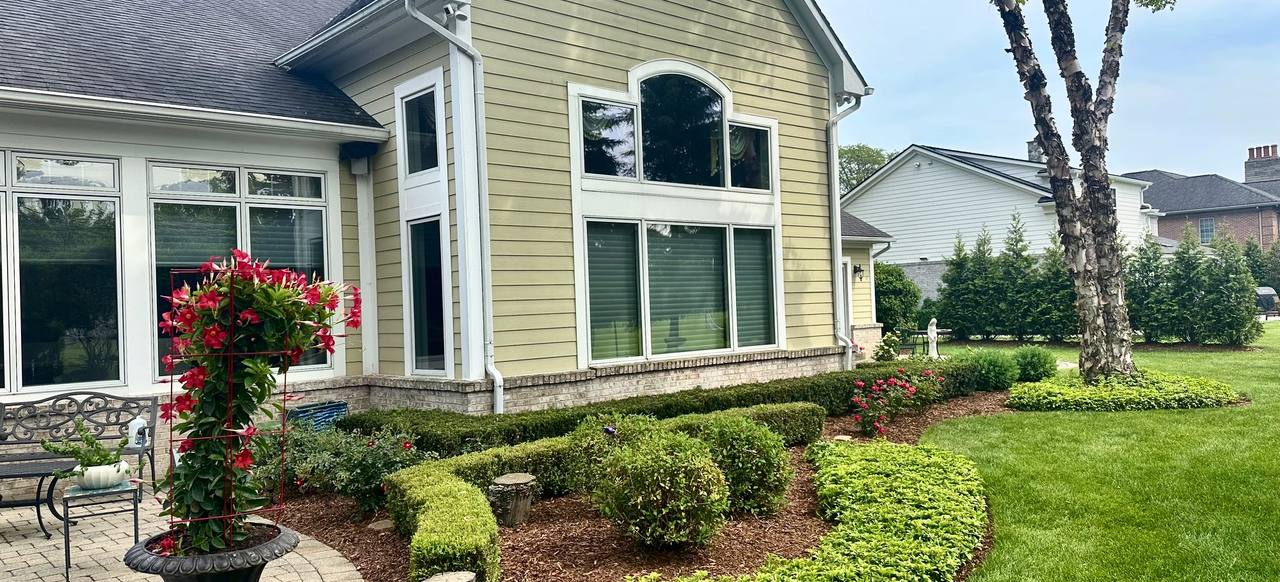
Photos from Jake's own jobs, not a stock library.
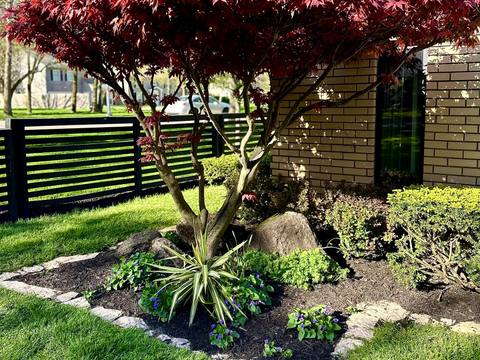
Japanese maple over boulders and grasses 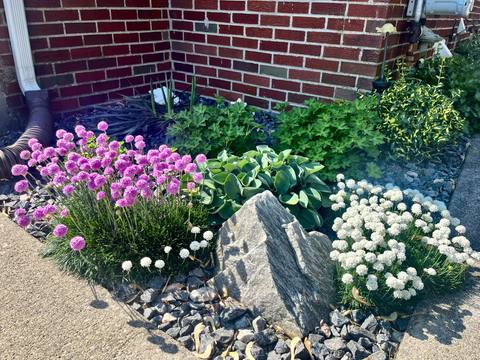
Boulder and spring color in a corner bed 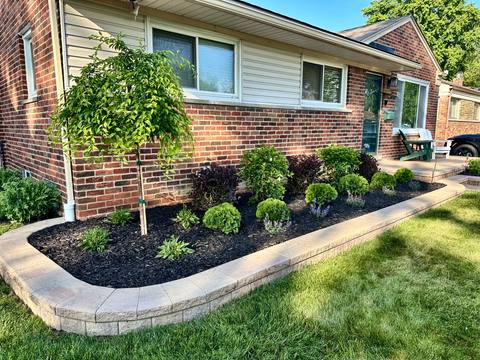
Low block border along a ranch 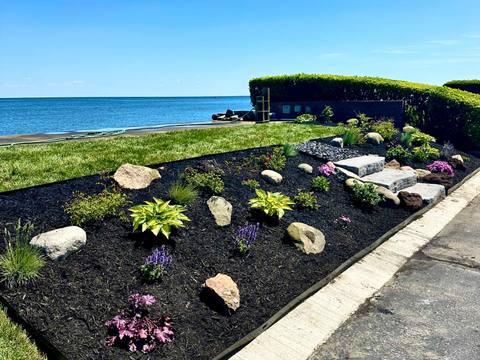
Boulders and low planting near the lake 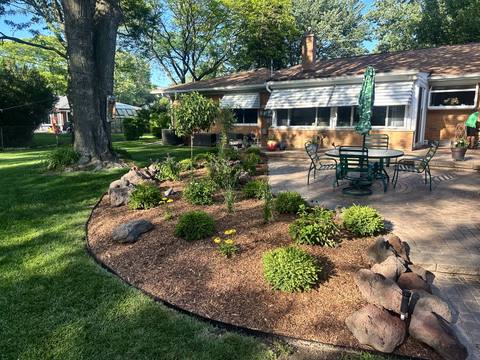
Island bed with boulders beside the patio 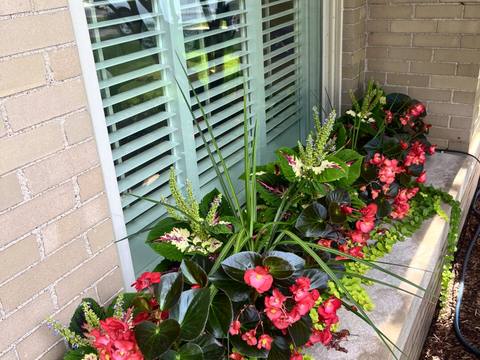
Seasonal color under a window
Reviews on Google
What people say after the crew leaves.
Very Happy with my landscaping. Great team to work with. Very kind & pleasant. Landscaping is clean & they did a great job cleaning up. Jake called right after the team was done asking how everything went & explained in detailed the importance of watering each plant. …
Meagan M.New landscaping
Jake with HD Landscape did an amazing job. We are the 3rd house he did on my street and he did AMAZING for each of my neighbors and me. He is reasonably priced, and most important of all he does quality work! You can tell he cares about doing the job right, and is very passionate. …
Amanda H.Trees and landscaping
HD Landscape did an outstanding job. They trimmed bushes, planted new shrubs, put down mulch, cut down a tree, grinded down the tree stump and had a company repair fence for me. They were so nice and did everything I asked. They showed up on time and gave me itemized costs beforehand.
Anne J.Trim, plant, mulch, tree and stump
Questions
What people ask about plant installation.
The things people ask us most before booking. If yours is not here, call or text (586) 718-8762.
Do you do plant installation in St. Clair Shores?
Yes. HD Landscape plants trees, shrubs and perennials in St. Clair Shores, where the business is based, and across Macomb, Oakland and Wayne counties. On city water, the city's odd and even irrigation days run from May 15 to October 1, but newly planted trees, shrubs and bushes can get water as often as they need for the first 21 days. Ask the city for the current rule.
How deep should a tree or shrub be planted?
Plant it so the root flare, the place where the trunk widens into the roots, sits level with the ground. That is the guidance from Michigan State University Extension. Deeper is not safer: planting too deep cuts down the water and oxygen reaching the fine roots.
How can I tell if my tree was planted too deep?
Look at the bottom of the trunk. If it goes into the ground like a fence post, with no change in width at the soil, it may be too deep. MSU Extension suggests digging gently with your fingers close to the trunk and looking for large roots in the top 1 to 2 inches of soil.
When can you plant trees and shrubs in Michigan?
Spring and early fall are the two good windows. MSU Extension calls early fall through mid October a good time for new trees and shrubs. Summer planting works too, it just asks for more water. We plant through the season, as long as the ground is workable.
How often should I water new trees and shrubs?
MSU Extension's guidance is a good watering right after planting, then once a week for the first two months, then about every two weeks for the rest of the summer unless it turns hot and dry. Jake will go over a plan for your plants, and we offer plant watering if you would rather hand it off.
Do you plant trees, or only shrubs and flowers?
We plant trees, shrubs and perennials, on their own or as part of a bigger landscape renovation. Tell us what you have in mind and Jake can say what should do well in that spot.
Can you take out the old bushes and plant new ones?
Yes. That is often the job: old plants out, roots and all, then new ones in. The size of the bed sets how long it takes, and Jake can give you a timeline when he walks it.
Do I need a landscape design before you plant?
Not for a few plants. If you are redoing a whole bed or the front of the house, a landscape design is worth doing first, so the plants, stone and lines all work together.
Does someone have to call MISS DIG before planting?
Yes. Michigan requires notice to MISS DIG 811 at least three business days before digging, on any project regardless of size or depth. When a contractor does the work, that call is the contractor's responsibility. MISS DIG does not mark private lines like sprinkler pipes or invisible dog fences, so tell us if you have them.
Do you install sprinklers with new plants?
No. We do not install sprinkler systems or irrigation. New plants still need water, so Jake will go over a plain plan with you, and we can water them for you while they settle in.
How much does plant installation cost?
One shrub and a full foundation bed are very different numbers. Plant size and count, how much digging the spot needs and whether anything has to come out first all move it. Jake will look at the spot for free and put each piece on an itemized estimate.
Where we do this
- St. Clair Shores
- Grosse Pointe
- Grosse Pointe Park
- Grosse Pointe Farms
- Grosse Pointe Woods
- Grosse Pointe Shores
- Birmingham
- Bloomfield Hills
- Bloomfield Township
- Beverly Hills
- Franklin
- West Bloomfield
- Royal Oak
- Huntington Woods
- Troy
- Rochester
- Rochester Hills
- Oakland Township
- Lake Orion
- Clinton Township
- Harrison Township
- Macomb Township
- Shelby Township
- Sterling Heights
- Washington Township
- Warren
- Fraser
- Mount Clemens
- Chesterfield Township
- New Baltimore
Background: a finished job, relit for evening
Free estimate
Tell us what you want planted.
One tree or a whole bed, tell us what you have in mind and where it is going. Text a photo if that is easier, and Jake will come back with an itemized estimate.